Employee Onboarding & Welcome Kits That Boost Retention (2026)
Key takeaways
- A good onboarding welcome kit makes day one feel intentional, which sets the tone for how a new hire reads the whole company.
- Keep it curated, not crammed. A few quality items people actually use beat a big box of forgettable filler.
- Timing matters as much as contents. A kit that lands on or before day one turns a routine shipment into a moment.
- For remote hires, the kit is often the only physical thing they hold from the company, so it carries extra weight.
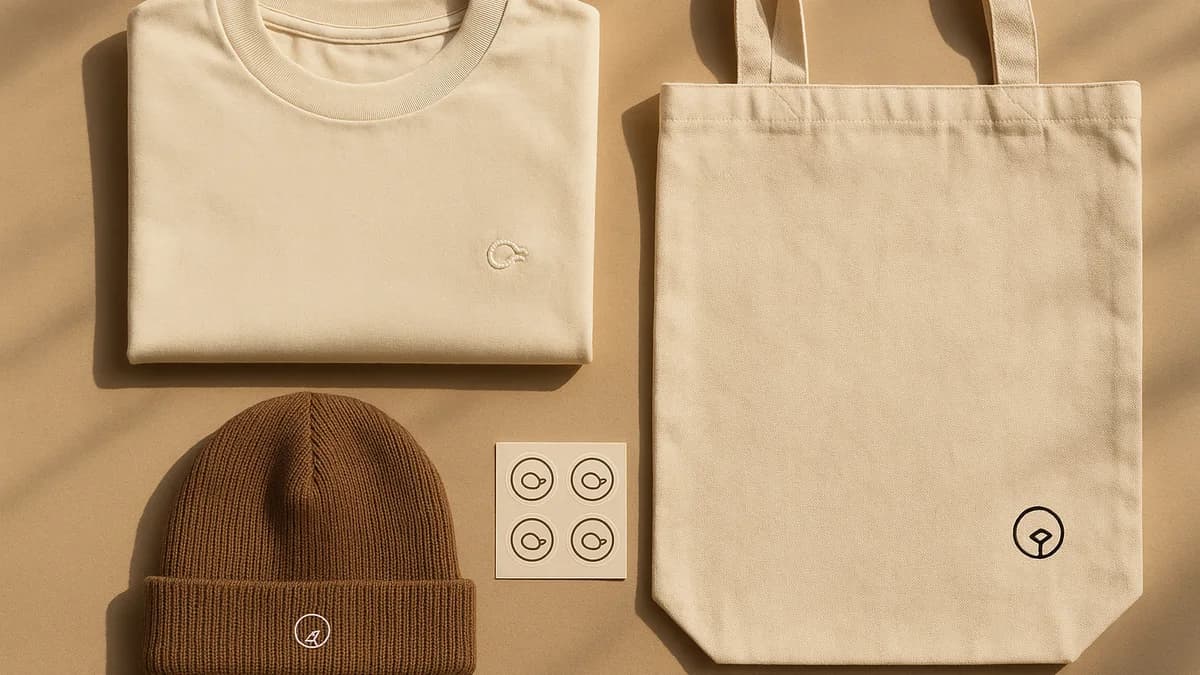
Employee welcome kit ideas usually go one of two ways. The forgettable version is a plastic bag of branded odds and ends that a new hire quietly recycles. The good version is a small, curated set of quality items that says the company thought about this person before they arrived. Onboarding is a first impression, and the kit is part of it, so it is worth getting right. This guide covers what to put in a welcome kit, how to build one by budget, how to handle remote hires, and the mistakes that make a kit fall flat. If you want kits made and shipped for you, our corporate merch service builds them in Los Angeles.
Why do onboarding welcome kits matter?
The first day sets an expectation, and people remember how it felt. A thoughtful welcome kit signals that the company is organized, cares about the details, and is glad the person joined, all before a single meeting. That matters for engagement early, when a new hire is still deciding how they feel about the choice they made. The kit is not going to fix a broken culture, and no hoodie retains an unhappy employee. But as a low-cost, high-visibility signal at exactly the moment first impressions form, a good kit punches well above its price. Think about the alternative. A new hire logs in on day one to a flurry of forms and a stack of accounts to set up, and nothing that says a single human was glad they came. A thoughtful welcome kit fills that gap. It is a small, physical way of saying we were expecting you, and we are happy you are here, and that message costs a fraction of what it returns in goodwill.
What to include in an employee welcome kit
A strong kit is built around a few useful things, not a long list of cheap ones. These are the pieces that consistently land.
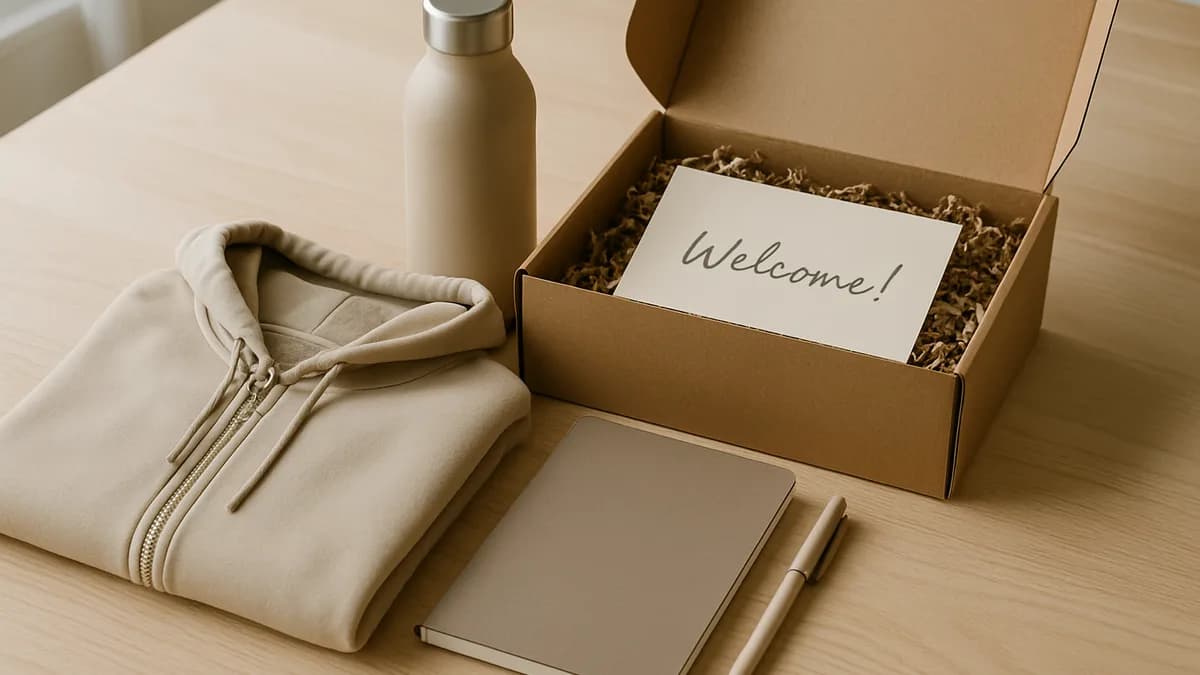
The goal is coherence, not volume. Four things someone keeps beat ten things they toss, and the note is what turns a box of products into a welcome.
Welcome kit ideas by budget
A good kit exists at every budget. The trick is to spend on fewer, better items rather than more cheap ones.
- $25 to $40. A quality tee, a good bottle or mug, a notebook, and a welcome note. Simple, but it feels considered.
- $40 to $75. A heavyweight hoodie, an insulated bottle, a nice notebook and pen, and a small extra. This is the sweet spot for most teams.
- $75 and up. A premium apparel piece, quality drinkware, tech like earbuds or a charger, and elevated packaging. Save this tier for senior roles or a signature program.
Notice what does not change with budget: the note, the curation, and the quality-over-quantity rule. Those cost little and matter most.
Onboarding kits for remote employees
Remote hires change the math. When someone never walks into an office, the kit is often the only physical thing they hold from the company, so it carries more weight than it would on a desk in a shared space. Ship it to arrive on or just before the start date, because a box waiting on the doorstep on day one is a small, real moment. Collect the shipping address early and discreetly during the pre-boarding paperwork, so the kit is not a scramble. And spend on items that justify the postage, since you are shipping individually anyway. We go deeper on distributed teams in our remote team swag kits guide.
How to make the unboxing feel like a gift
Presentation does a surprising amount of work. The same items in a clean box with a note feel completely different from the same items in a poly mailer. Keep the packaging simple and tidy, so opening it feels intentional rather than like an inventory drop. Put the note on top, so the first thing the person sees is a message, not a logo. And resist the urge to overbrand every surface, because a kit that looks like a gift is remembered, while a kit that looks like an ad is not. Small touches, done consistently, are what people actually talk about. The economics are almost unfair when you think about it, because a clean box, a folded hoodie, and a three-line note cost a company a few dollars and ten minutes, and in return a person who was quietly nervous about a new job feels, in the first hour, that they made the right call, which is the sort of return most onboarding software would happily trade its roadmap for.
New hire kit timing: when it should arrive
Timing is the most overlooked lever, and it is free. A kit that lands on day one is a warm welcome. The same kit that shows up three weeks later is an afterthought, and it quietly undercuts the message. Work backward from the start date, account for production and shipping, and place the order with room to spare. For custom pieces that means planning weeks ahead, not days, which ties back to lead times we cover in our custom merch MOQ and lead times guide. The content of the kit matters, but arriving at the right moment is what turns it into a first impression instead of a delivery.
How to personalize a welcome kit
Personalization is what separates a welcome kit from a supply drop, and it does not require much. A handwritten or hand-signed note from the manager or the team lands harder than any product in the box. Adding the person's name, or a small nod to their role, turns a generic set into something that feels chosen for them. Even a short line about why the team is glad they joined does real work. None of this should scale into a mass mail-merge feel, and that is the point, because the moment a welcome kit reads as automated, it stops feeling like a welcome. A little effort here is the cheapest culture investment a company can make.
Onboarding kit examples by role
Ready to make your line? Get a free production quote.
Drop your email and tell us what you are making. Our LA cut-and-sew team will follow up with real pricing and lead times, usually within 24 hours.
The core stays the same, but a few tweaks by role make the package feel tailored.
- Engineers and product. A quality hoodie, a good bottle, and a useful tech extra like a charger fit the daily setup.
- Sales and client-facing roles. A sharp polo or a premium tee reads well when the person will represent the brand in person.
- Remote hires. Lean on items that make a home desk nicer, and get the packaging right, since the unboxing is the whole in-person moment.
- Leadership. Elevate the apparel and the packaging a notch, and the welcome matches the role.
The idea is not four entirely different boxes. It is one strong core with small, thoughtful adjustments that make each new hire feel seen.
Welcome kit mistakes to avoid
A few common errors turn a good idea into a wasted one:
- Cramming the box. Ten cheap items feel like clutter. A few good ones feel like care.
- Skipping the note. Without a personal message, it is just products in a box.
- Cheap apparel. A scratchy tee in a boxy fit never gets worn, so the impression dies fast.
- Late arrival. A kit that misses day one loses most of its impact.
- One loud logo everywhere. Overbranding makes it feel like an ad, not a gift.
Avoiding these costs nothing. It is mostly a matter of choosing intention over volume.
Building a repeatable onboarding kit program
One-off kits are fine, but a repeatable program is better. Decide on a standard kit, store the artwork and specs with your supplier, and set a reorder trigger so you never run short before a hiring wave. Consistency is part of the message, because every new hire getting the same thoughtful welcome makes the company feel deliberate rather than improvised. That is the work we do at Plucky Reach, producing made-in-Los-Angeles apparel and assembling kits that are ready to ship the moment a new name lands. If you are still gathering ideas, our company swag ideas guide is a good place to start.
Building an onboarding kit? Tell us your headcount and budget or contact our LA team and we will help you put together a kit new hires actually keep.
The welcome kit checklist
Before you order, run the welcome kit past a few simple questions.
- Would you be happy to receive it? If the welcome kit would not delight you, it will not delight a new hire either.
- Is there a note? A welcome kit without a personal message is just products in a box.
- Will it arrive on time? Plan the welcome kit to land on or before day one, not weeks after.
- Does the apparel actually fit and feel good? Cheap apparel is the fastest way to sink an otherwise nice kit.
- Can you repeat it easily? A welcome kit you can reorder in a click scales with hiring instead of fighting it.
Five yeses, and the welcome kit is ready to send.
Frequently asked questions
What should go in an employee welcome kit?
A curated set beats a crammed box: quality apparel in a real fit, an insulated bottle or mug, a good notebook and pen, a personal welcome note, and one small extra like stickers or a charging cable, presented in clean packaging.
How much should an onboarding kit cost?
Good kits run from about $25 to $40 at the basic tier, $40 to $75 for most teams, and $75 and up for senior roles or signature programs. Spend on fewer, better items rather than more cheap ones.
When should a new hire kit arrive?
On or just before the start date. A kit that lands on day one is a warm welcome, while one that arrives weeks later reads as an afterthought. Plan production and shipping backward from the start date.
How do onboarding kits work for remote employees?
Ship to the new hire's home to arrive by day one. Collect the address early during pre-boarding, and spend on items worth the postage, since the kit is often a remote hire's only physical touch with the company.
Do welcome kits actually help retention?
A kit alone will not retain an unhappy employee, but as a low-cost signal at the moment first impressions form, a thoughtful welcome improves early engagement and sets a positive tone.
Get a Corporate Merch Quote | Use Our Cost Calculator | Contact Us
Related reading: Company swag ideas for 2026 · Remote team swag kits · Premium vs cheap swag · Custom merch MOQ and lead times
Ready to make your line? Get a free production quote.
Drop your email and tell us what you are making. Our LA cut-and-sew team will follow up with real pricing and lead times, usually within 24 hours.
Plucky Reach
Fashion Business Consulting • Los Angeles Fashion District
Plucky Reach is a fashion business consulting firm based in the Los Angeles Fashion District. We have helped 1,000+ clothing brand founders go from idea to production, from first sketch to retail shelf. Our team has 20+ years of direct relationships with LA garment manufacturers, and we specialize in connecting emerging brands with the right production partners.