Custom Swag for Small Business: A Budget Guide (2026)
Key takeaways
- Custom swag for a small business works best when you pick a few genuinely useful products instead of buying a little of everything at once.
- Small orders carry more setup per unit, so a low minimum matters far more to a small brand than the sticker price on any single item.
- Good decoration on a plain garment makes a tiny run look like a real brand, which is how a small business punches above its size.
- Local marketing and customer gifts are where swag pays you back fastest, and a quick quote turns a rough budget into a real number.
Custom swag for a small business does not have to drain the bank account. The trick is simple. Pick a few useful products, order at a minimum that fits your actual size, and decorate them well enough to look bigger than you are. You can run a sharp swag program for less than the cost of one busy month of ads, and the pieces keep working long after the campaign ends. This guide walks through smart product picks, realistic minimums for small orders, local marketing angles, and the mistakes worth skipping, plus where a made-in-LA corporate merch service with genuinely low minimums fits a small business on a tight budget.
How much does custom swag cost for a small business?
It depends on the product and the run size, but a small business can start a real program for a few hundred dollars rather than a few thousand. The number that surprises most first-time buyers is not the item price. It is the setup. Screen and embroidery setups are one-time charges per design, and on a small order those fixed costs get spread across fewer pieces, which pushes the per-unit price up. That single fact shapes almost every smart decision you make about swag, so it is worth understanding before you pick a single product.
Those are starting ranges, not quotes. A shop ordering fifty tees with a one-color print lands near the bottom of the tee range, while a dozen embroidered hoodies sit near the top. Read the table as a planning tool. It tells you which products give a small business the most brand presence per dollar, and it makes clear why mixing one hero item with a cheap high-volume piece beats spreading a small budget thin.
Smart product picks on a small business budget
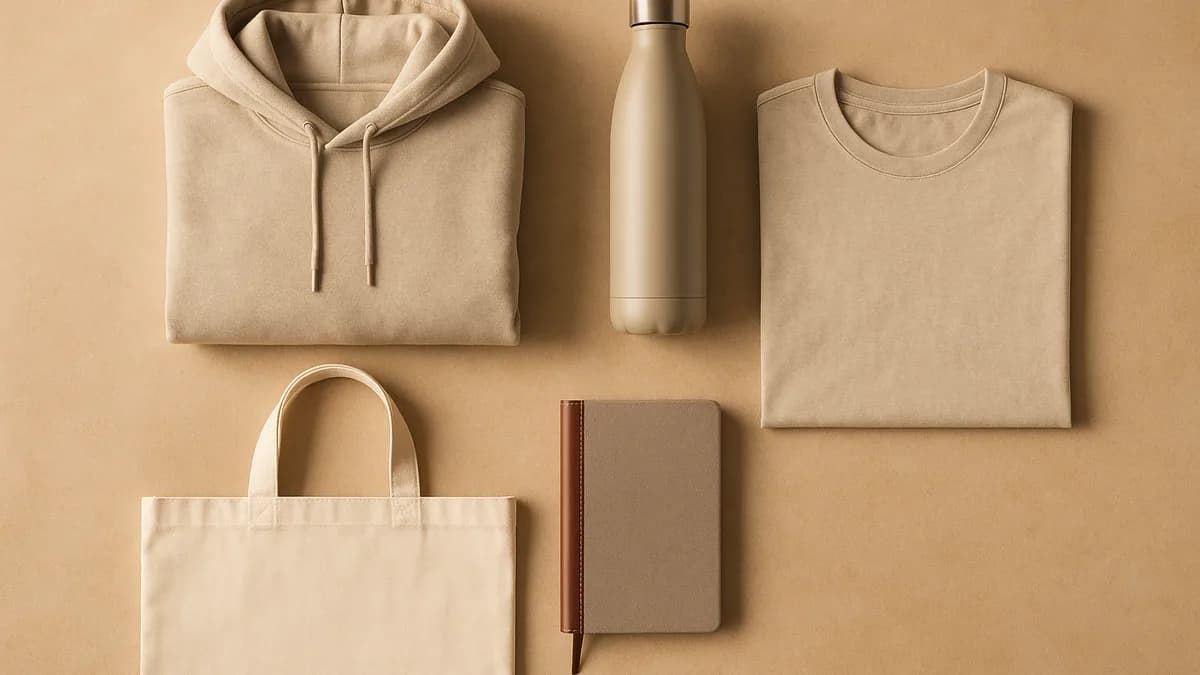
The instinct is to buy a bit of everything. Resist it. A small business gets far more out of two products people actually use than out of eight that end up in a drawer. Anchor the program with one hero piece and one cheap volume piece. The hero carries the brand. The volume piece gets it everywhere.
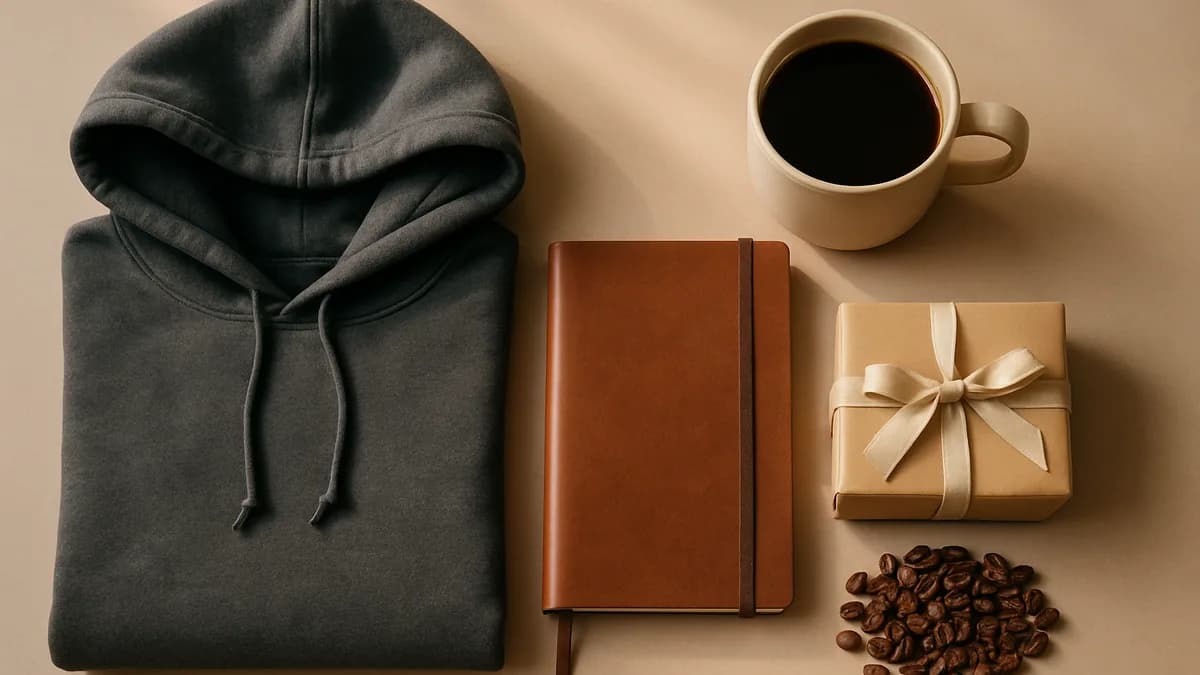
- Hero item. A well-decorated hoodie, cap, or heavyweight tee that staff and top customers are genuinely proud to wear in public, because a garment someone chooses to wear is the cheapest advertising you will ever buy.
- Volume item. Stickers, totes, or basic tees that cost little each and go out with orders, at events, and in welcome kits, spreading the logo across a wide area on a modest budget.
- Skip the gimmicks. Stress balls and cheap pens get tossed. They tell a brand story nobody wants to hear, and the spend rarely comes back.
Keep the design clean. A crisp logo on a good blank reads as intentional, and intention is exactly what makes a small business look larger than its headcount.
Realistic minimums for a small order
Minimums are where a small business feels the difference between suppliers most sharply. Many decorators set floors at 50, 100, or even 200 pieces per design, which is fine for a big company and painful for a small one. You do not want 200 hoodies sitting in a closet. You want the right number for a business your size, decorated properly, without paying a penalty for ordering sensibly.
Here is the honest tension. Lower minimums give you flexibility, but very small runs cost more per unit because setup is spread thin. The sweet spot for most small orders sits between 24 and 100 pieces per product. That range keeps the per-unit price reasonable while leaving a small business room to reorder the winners and quietly retire whatever did not land.
Low minimums and why they matter for small orders
A low minimum is not a minor perk. For a small business, it is the single feature that decides whether a swag program is even possible. Low minimums let you test. They let you order twenty-five of something, see whether people wear it, and only then scale the ones that work.
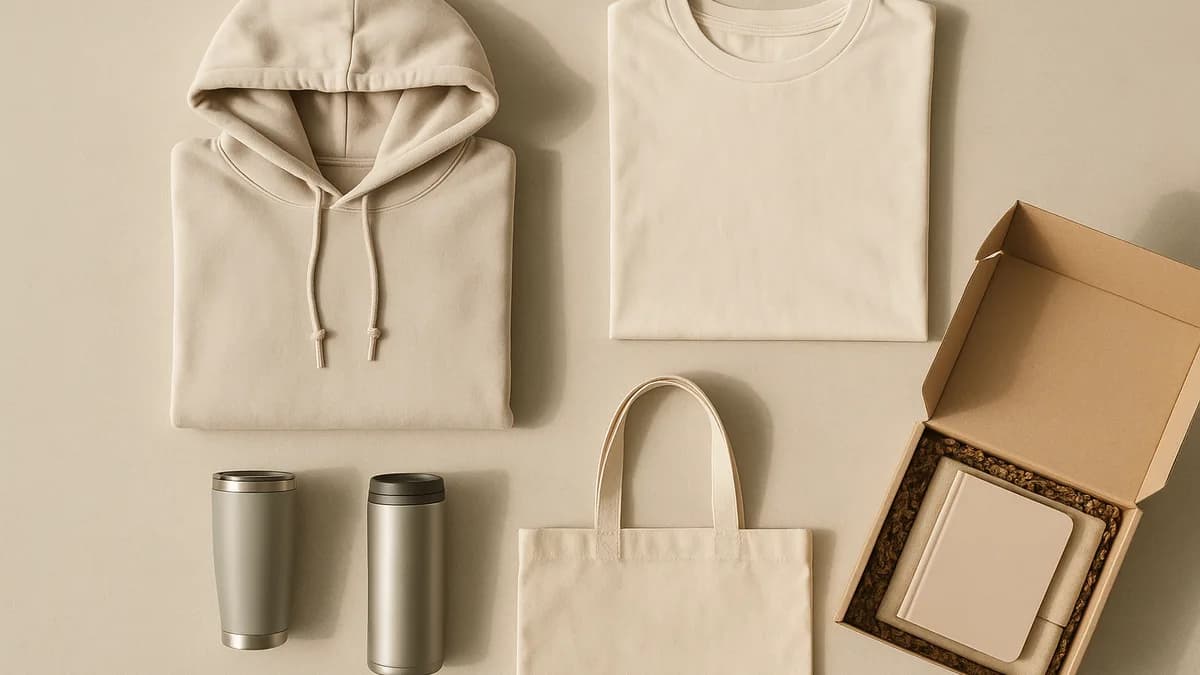
This is where a maker built for smaller runs changes the math. When a manufacturer is set up for low minimums, you are not forced to overbuy to clear an arbitrary floor, so you can spread the same budget across two or three tested products instead of gambling it all on one oversized order that may never move. Low minimums also make seasonal drops realistic, because a small run for a holiday or a local event stops being a luxury and becomes a normal, repeatable part of how a small business shows up.
Want swag that fits a small business budget without the giant minimum? Start with our corporate merch service or tell our LA team your size and budget and we will send a real quote with honest lead times.
How to look bigger than you are
Size is a perception game, and swag is one of the cheapest ways to win it. A polished piece of merch signals stability. It tells a customer that the small business behind it plans ahead and cares about details, and that quiet signal often does more work than a headcount ever could. Three things move that perception the most.
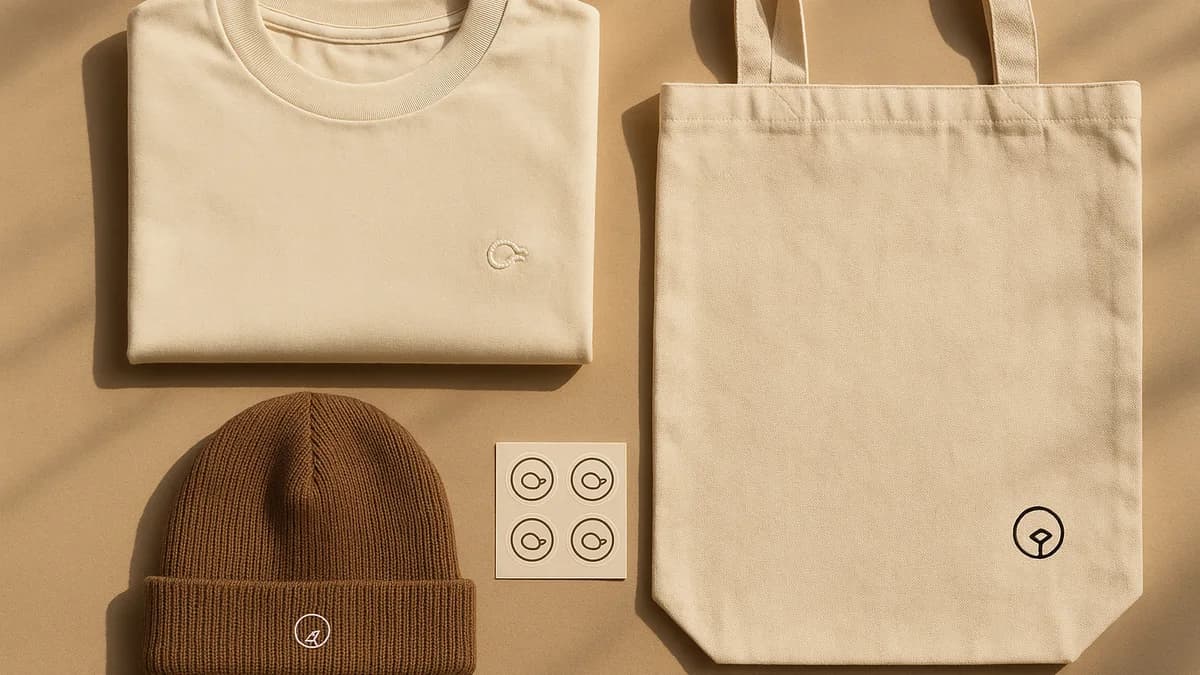
- Decoration quality. A sharp embroidered logo or a clean screen print on a solid blank reads as retail, while a fuzzy heat transfer on a thin shirt reads as a rushed afterthought that undercuts everything you are trying to project.
- Consistency. One logo, one or two brand colors, used the same way across every piece, so the tote, the tee, and the sticker all feel like they come from the same company rather than five different ones.
- Restraint. Fewer, better items beat a pile of cheap ones every time, and a small business that ships one great hoodie looks more established than one handing out five forgettable trinkets.
None of this requires a big budget. It requires taste and a maker who can execute it cleanly, which is exactly the gap a good corporate merch service fills for a company that cannot keep a design team on staff.
Local marketing swag that wins customers
Planning a merch run? Get a free quote from our LA team.
Tell us your pieces and quantities. We make retail-quality corporate merch in Los Angeles and will follow up with pricing and lead times, usually within 24 hours.
Swag earns its keep fastest at the local level. A small business that lives on foot traffic, referrals, and repeat customers can turn everyday merch into slow, steady marketing that a paid ad simply cannot match, because a person wearing your cap around town is a recommendation that keeps moving. Think about where your customers already are and put the brand there.
- Customer thank-you gifts. A small, well-made item slipped into a top order builds loyalty at a cost of a few dollars, and it turns a one-time buyer into someone who remembers the name.
- Local events and markets. Totes and tees handed out at a neighborhood fair walk your logo through the whole community, which is high-value exposure for a brand rooted in one area.
- Team visibility. Staff in branded caps or shirts make even a two-person small business feel like a real operation to every customer who walks in the door.
The pattern is worth naming. Local swag works because it is worn and seen by the exact people you want, over and over, long after the money was spent. For a deeper look at products that travel well, our guide to company swag ideas for 2026 lays out what is landing this year.
Swag mistakes small businesses should avoid
Most wasted swag budgets trace back to the same handful of errors. A small business can dodge nearly all of them by slowing down before the order goes in. Watch for these.
Read that list as a filter. Almost every regret people have about swag comes from moving fast on a big order rather than testing a small one first, so the safest move is to start small, watch what people actually use, and scale only that. For a fuller cost breakdown, our guide to custom company apparel cost shows exactly what drives the price up or down.
Where made-in-LA helps a small business
Where your swag is made is not just a sticker on a label. For a small business, a domestic maker shortens the distance between an idea and a finished box on your desk. You can get a sample, tweak a color, and reorder without the weeks of lag and shipping surprises that come with overseas production. Speed matters when you need merch for an event that is three weeks out.
There is a quality angle too. When a manufacturer cuts and sews in Los Angeles, a small business can inspect the work, request real fabric, and get a garment that reads as retail rather than promotional, which is the whole point of looking bigger than you are. If you want to understand how custom garments come together, our overview of cut-and-sew manufacturing explains the process you are actually paying for. And if you are a young company weighing your first order, our take on swag for startups covers the early-stage playbook you can borrow.
Frequently asked questions
How much should a small business spend on custom swag?
Start with a few hundred dollars rather than a few thousand. You get the most from one hero item and one cheap volume piece, tested in a run of 24 to 100 units before scaling the products that people actually wear and use.
What is the best swag for a small business on a tight budget?
Stickers and tote bags give the widest reach per dollar, while a single well-decorated tee or cap acts as the hero piece. That pairing lets you look polished without spreading a small budget across too many products.
Why do low minimums matter so much for a small business?
Because setup costs are fixed per design. Low minimums let you test small runs, avoid overbuying, and reorder only the winners, which keeps money out of dead stock sitting in a closet.
Can custom swag really make a small business look bigger?
Yes. Clean decoration, consistent branding, and restraint make a tiny team read as an established company. One sharp, retail-quality item does more for you than a pile of cheap trinkets ever will.
How far ahead should a small business order swag?
Plan four to six weeks out for a custom run. That window lets you approve a sample, avoid rush fees, and hit an event or launch date without paying a premium for speed.
Get a Corporate Merch Quote | Use Our Cost Calculator | Contact Us
Related reading: Swag for startups · Company swag ideas 2026 · Custom company apparel cost · Cut-and-sew manufacturing
Planning a merch run? Get a free quote from our LA team.
Tell us your pieces and quantities. We make retail-quality corporate merch in Los Angeles and will follow up with pricing and lead times, usually within 24 hours.
Plucky Reach
Fashion Business Consulting • Los Angeles Fashion District
Plucky Reach is a fashion business consulting firm based in the Los Angeles Fashion District. We have helped 1,000+ clothing brand founders go from idea to production, from first sketch to retail shelf. Our team has 20+ years of direct relationships with LA garment manufacturers, and we specialize in connecting emerging brands with the right production partners.