Custom Pants Manufacturer in Los Angeles

Custom pants and trouser manufacturer in Los Angeles. Tailored dress pants, wide-leg trousers, joggers, and cargo pants. Cotton, linen, wool suiting, ponte. Private label, low MOQ.

50+ piece minimumLow MOQ pants production
4-7 week turnaroundFrom sample approval to delivery
All waistband typesStructured, elastic, and partial elastic
Full package productionFabric sourcing through packaging

Your Trusted Pants Manufacturing Partner

A full package pants manufacturer in Los Angeles — cut and sew manufacturing of cargo pants, joggers, sweatpants, chinos, and dress pants in cotton twill, ripstop, technical stretch, and ponte. From pants fabric sourcing and pants sample making through waistband construction, pocket and fly assembly, and crease setting to custom pants labels, zippers, buttons, hardware, quality control, and bulk pants production. Low MOQ? small batch pants production from 50 pieces. Building a brand? private label pants manufacturing with woven labels, care labels, and branded packaging. Compare with jeans and denim manufacturing, activewear manufacturing (leggings, yoga pants), or hoodie manufacturing (sweatpants crossover). Use the pants production cost estimator or explore all clothing production services in Los Angeles.

Custom and Private Label Pants Manufacturing

Full package pants and trouser manufacturer in Los Angeles. We handle fabric sourcing (cotton twill, linen, wool suiting, ponte, technical stretch), pattern making and grading, fit sampling and revisions, cut and sew construction (waistband, pockets, fly, inseam, crease setting, hem), pressing, and private label packaging. From chinos and wide-leg trousers to cargo pants, joggers, and tailored dress pants. Private label from 50 pieces with custom woven labels, FTC-compliant care labels, button selection, hangtags, and branded packaging.

Cargo Pants & Streetwear Pants Manufacturer

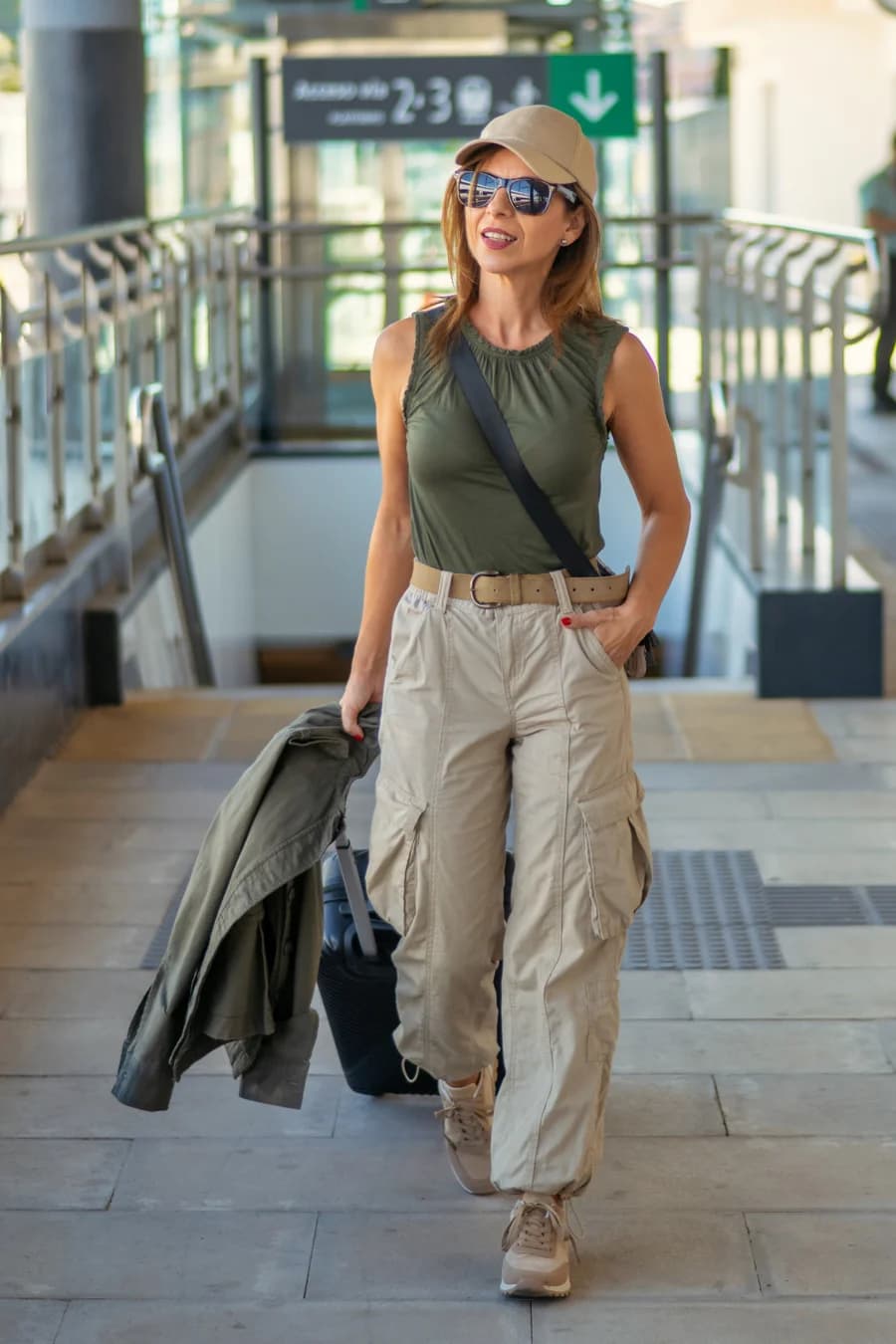
Cargo pants manufacturer in Los Angeles — trending dual streetwear and tactical construction. Oversized bellows pockets with flap and snap or button closure, reinforced stress points with bar tacks, and straight or relaxed-straight leg in ripstop, cotton canvas, or stretch cotton twill. Chinos manufactured in mid-weight cotton twill and stretch cotton — classic flat-front trouser with slanted side pockets, double-welt back pockets, and pressed crease. Dress pants and tailored trousers in wool suiting, stretch wool, and ponte knit for career and formalwear brands. All styles from 50 pieces with full private label.

Jogger, Sweatpants & Athleisure Pants Manufacturer

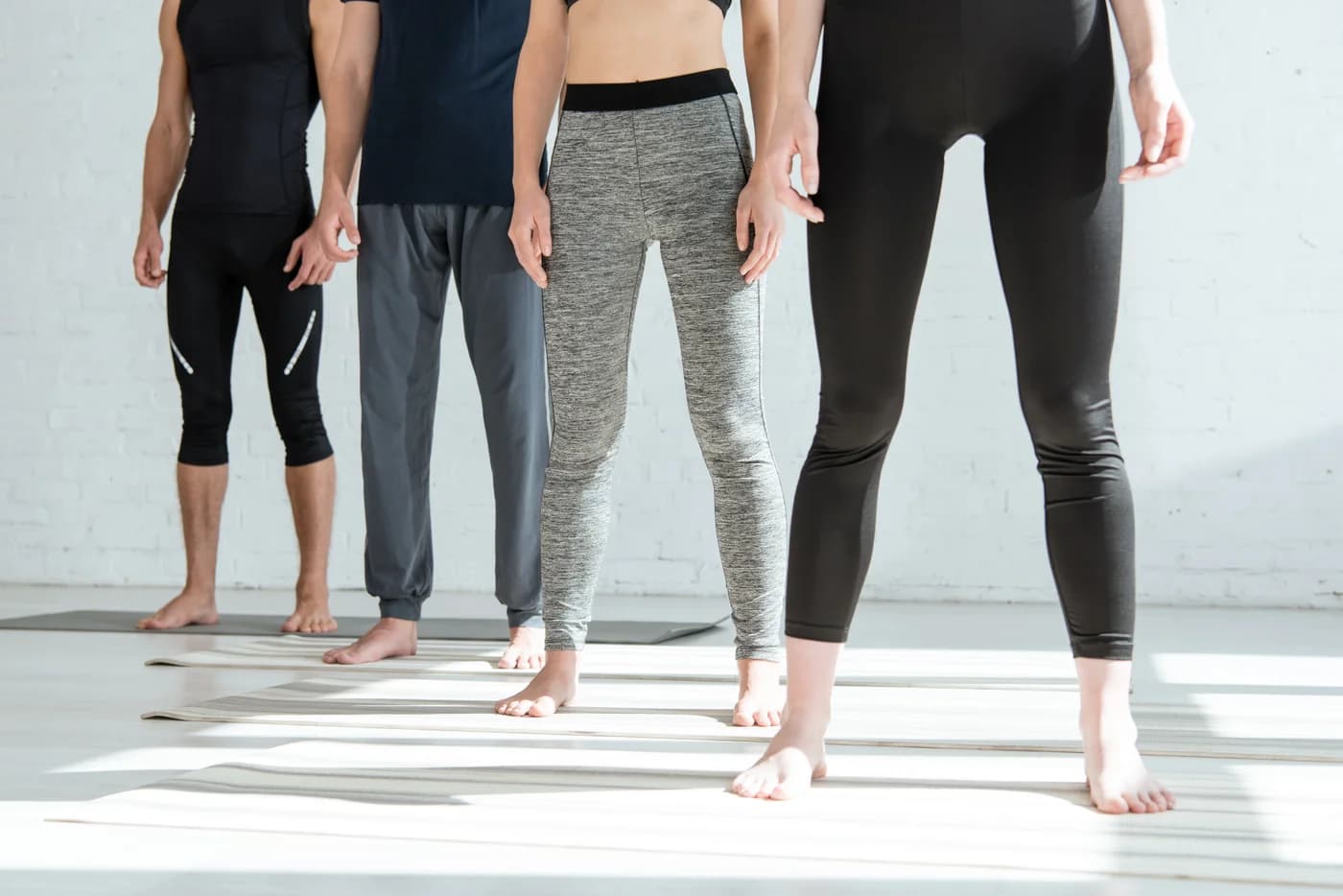
Jogger pants and sweatpants manufacturer in Los Angeles — ponte, French terry, and technical stretch from 50 pieces. Elasticated waistband in fold-over or separate band construction, ankle ribbing in matching or contrast knit, and side seam pockets. Coverstitch and flatlock seam construction. Performance moisture-wicking finish available. Track pants with side stripes, welt pockets, and snap enclosures. Streetwear-positioned sweatpants in heavyweight French terry or fleece with oversized silhouettes and drop-crotch construction also available.

Low MOQ Pants Manufacturing for Emerging Brands

Custom pants manufacturer in LA with 50-piece minimums — built for capsule collections, startup fashion brands, and contemporary labels adding a pants category. Full range from casual cotton twill trousers and linen wide-legs to ponte knit work trousers and technical joggers. All styles available in full package: fabric, pattern, sample, bulk production, pressing, labeling, and packaging. LA-based production means accessible sampling and spec revisions without overseas minimum constraints.
Custom pants manufacturer Los Angeles
Pants manufacturer Los Angeles
Trouser manufacturer Los Angeles
Linen pants manufacturer Los Angeles
Private label pants Los Angeles
Cargo and wide leg pants manufacturer Los Angeles
Our process

Pants Production Process

Every step managed — from fabric sourcing and pattern grading through waistband construction, fly assembly, crease setting, and private label packaging.

Custom pants tech pack review: fabric sourcing, waistband planning, and pant construction Los Angeles

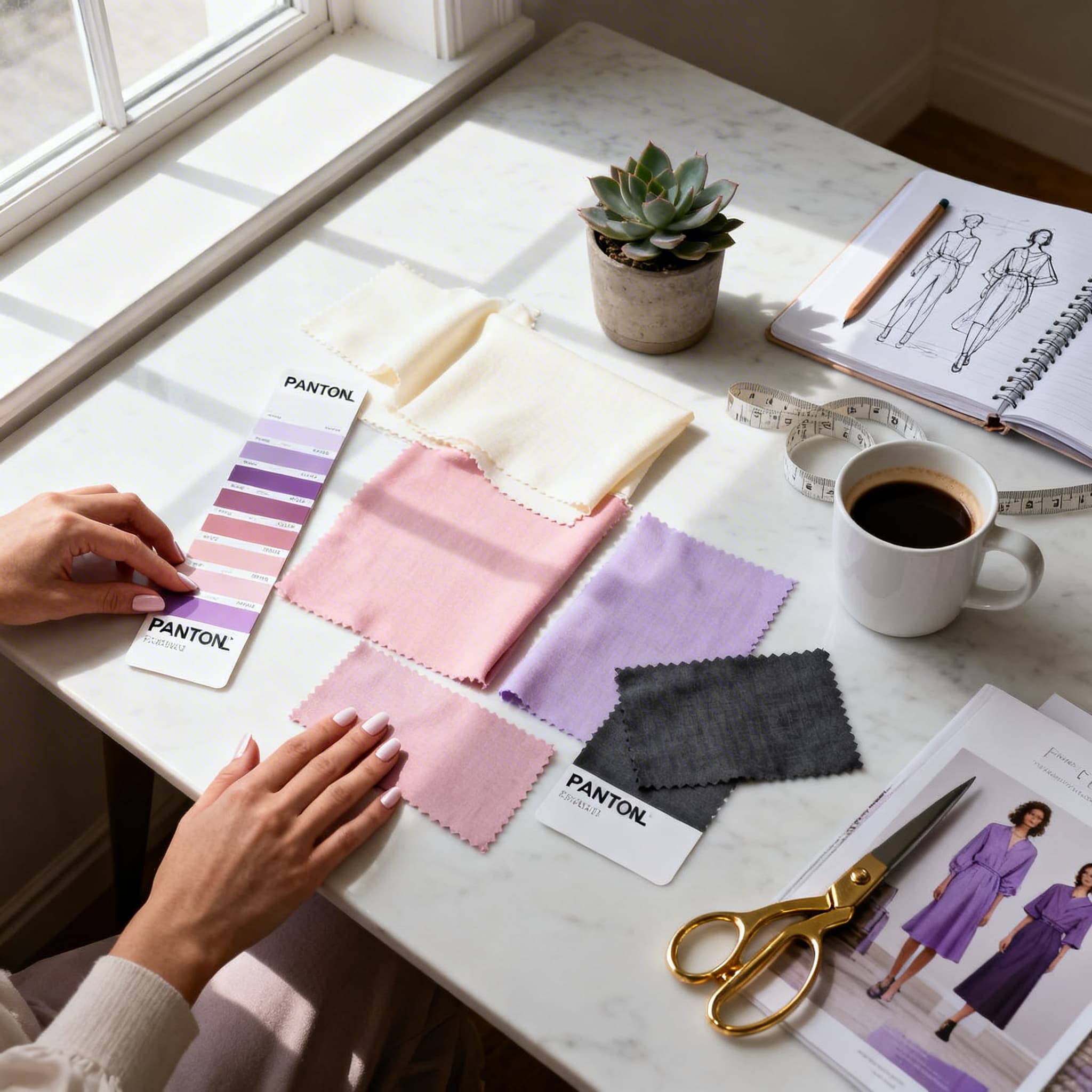
Tech Pack Review and Fabric Sourcing

Your pants design is reviewed for fabric selection (woven vs. knit, weight, stretch recovery), construction method (waistband type, pocket construction, fly or pull-on closure, crease, lining), and any private label or cargo customization. Fabric is sourced and tested for shrinkage, stretch recovery, and drape before the pattern is cut. For wool suiting, a shrink test and pressing test are run on a fabric sample before ordering the full yardage.

Pants pattern making and fit sampling Los Angeles: rise, seat, and waistband construction review

Pattern Making and Fit Sampling

The trouser pattern block is developed from your tech pack or reference garment and graded to your full size run. Rise, seat ease, thigh, knee, and leg opening measurements are confirmed at each size. The fit sample is cut in the production fabric, assembled per the tech pack spec, pressed, and reviewed: waistband alignment, pocket placement and function, fly operation, crease line, and hem level. Revisions are marked and a second sample produced before bulk approval.

Pants bulk production Los Angeles: waistband attachment, pocket construction, and fly assembly

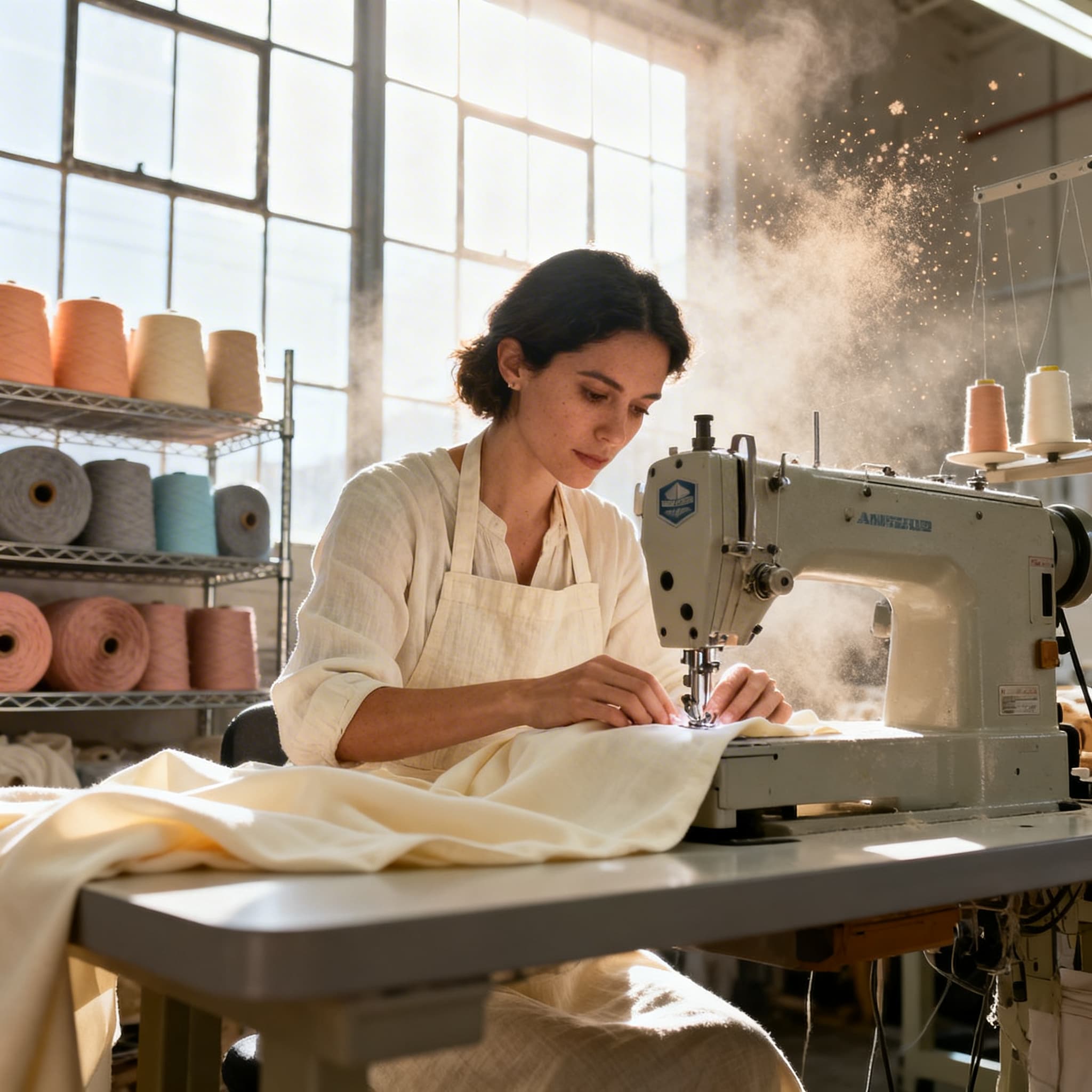
Bulk Cutting and Assembly

Fabric is spread and cut per the approved graded pattern. For woven pants, fabric nap direction, plaids, and stripe alignment are checked before spreading. Assembly is sequenced through the line: darts or pleats (if applicable), pocket construction, inseam and outseam, crotch seam, waistband attachment, fly construction and zipper insertion, belt loop attachment, hem, and any cargo pocket application. In-line pressing continues throughout. QC checks pocket alignment, fly flatness, and waistband levelness at each stage.

Pants quality control and private label packaging Los Angeles: final press, QC check, and labeling

Pressing, QC, and Packaging

Each trouser receives a final press — seams pressed open, waistband shaped over a ham, crease set from waistband to hem. QC checks dimensions against the size spec, pocket depth and alignment, zipper operation, waistband closure, hem level, and bar tack placement. Garments are labeled with woven label and care label, hangtag attached at the waistband, and packed in poly bag or folded presentation packaging per your spec.

Ready to start?

Get a production quote for your activewear line.

Get a Quote
Pricing & Questions

Specs, Pricing & Common Questions

Everything you need to know before starting your activewear production run.

Technical Specs and Pricing

Activewear production at a glance

Minimum Order50 pieces per style per colorway (75-100 pcs recommended for cargo and multi-pocket styles)
Production Timeline4-7 weeks from approved sample
Pants StylesTailored trousers, wide-leg pants, straight-leg pants, tapered pants, cropped pants, joggers, cargo pants, palazzo pants, track pants, harem pants, culottes, dress pants, suiting separates
FabricsCotton twill (light & mid-weight), stretch cotton twill, linen, linen-cotton blend, wool suiting (150-350g), ponte knit, technical stretch (nylon/spandex), French terry, velvet/velveteen, scuba
Construction MethodsStructured waistband with canvas interlining, elastic and partial-elastic waistbands, fly construction (concealed zipper), welt back pockets, slanted side pockets, cargo/bellows pockets, flat-felled inseam, crease tape, full and partial lining
Price Range$16-$42per unit; pricing varies by fabric (cotton twill vs. wool suiting), construction complexity (tailored trouser vs. jogger), pocket type (standard vs. cargo), and lining requirement
Private LabelCustom woven labels, FTC-compliant care labels, button selection, tack labels, hangtags, poly bag or folded packaging from 50 pieces

Pricing varies by fabric type (cotton twill vs. wool suiting), construction complexity (tailored vs. jogger), pocket configuration (standard vs. cargo), and lining requirement.

Get a Quote

Pants Manufacturing FAQ

We manufacture the full range of woven and knit pants styles. Tailored trousers: classic flat-front trouser with a structured waistband, side pockets (either a slanted side-seam pocket or a welt pocket), and a center-back welt pocket — the foundational silhouette for dress pants, suiting separates, and career wear. Wide-leg trousers: a high-rise or mid-rise trouser with a dramatically wide leg opening — the silhouette is produced in linen, cotton poplin, and fluid suiting fabrics where the leg drape is central to the design. Straight-leg pants: a consistent leg width from hip to hem — used in work wear, casual trouser styles, and cargo pants. Tapered pants: wider at the hip and thigh, tapering to a narrower leg opening at the ankle — used in contemporary trouser styles, joggers, and smart casual pants. Cropped pants: any of the above silhouettes cut to a cropped inseam (typically ending at the calf or ankle, rather than at the floor) — common in contemporary collections. Jogger pants: a relaxed fit with an elasticated waistband and elasticated or ribbed cuffs at the ankle — typically sewn in ponte knit, French terry, or technical stretch fabric. Cargo pants: a utilitarian trouser with oversized patch pockets at the thigh (bellows pockets or flat patch pockets with flap and button), a straight or relaxed straight leg, and reinforced stress points. Palazzo pants: an extremely wide-leg silhouette in fluid fabrics — typically cut on the straight grain to maximize side drape. Track pants and athletic pants: a relaxed or slim fit with side stripes, welt pockets, and elasticated waist and cuff — produced in technical stretch, tricot, or ponte. Harem pants: a low-crotch silhouette with a full seat and tapered leg — produced in draped woven or jersey fabric. Culottes: a wide-leg crop pant with a hem at the knee or calf that silhouettes as a skirt — typically in linen, cotton, or suiting.
Cotton twill is the workhorse fabric for pants production — a tightly woven diagonal-weave fabric with good durability, a slight structure, and versatility across casual and semi-formal styles. Twill is used for chino-style trousers, cargo pants, work pants, and casual dress pants. Standard weights range from 6 oz (light summer) to 10 oz (structured trouser). Linen and linen-cotton blends are used for relaxed-fit trousers, wide-leg pants, and summer collections — linen is naturally breathable and cool but wrinkles easily in wear, which can be mitigated with a linen-cotton or linen-rayon blend. Wool suiting fabric (worsted wool, wool-poly blend, or stretch wool) is used for tailored trousers and dress pants — it presses to a sharp crease, holds structure through wear, and is the standard fabric for classic suiting. Lightweight wool (150-200g/m²) is used for spring/summer suiting; heavier weight (280-350g/m²) for fall/winter. Ponte knit is a medium-weight double-knit fabric (typically polyester/rayon or polyester/viscose blend) with a smooth face and minimal stretch in both directions — it is used for the "knit trouser" category that bridges casual and work wear, providing comfort with a tailored appearance. Scuba (polyester knit with a neoprene-like feel) is used for structured legging-style pants and fashion pants. Technical stretch (nylon/spandex, polyester/spandex blends) is used for joggers, athletic pants, and performance-positioned casual pants. French terry (cotton/poly or cotton/spandex loop-back knit) is used for casual joggers and loungewear pants. Velvet and velveteen are used for dress pants and evening trousers. Denim (non-jeans cut pants) is used for casual trouser styles in looser silhouettes.
The waistband is the most structurally complex single component of a pants garment — it must fit the body, support the weight of the garment when worn, interface correctly to prevent rolling or collapsing, attach the closure correctly, and finish cleanly on both the outside and inside of the garment. There are four primary waistband constructions used in pants manufacturing. Structured waistband (standard tailored trouser): a strip of outer fabric interfaced with a firm fusible interlining (waistband canvas or a dedicated waistband interlining product), sewn to the top of the trouser at the waistline seam, turned down so the interlining is sandwiched between the outer fabric and the inner facing, and slip-stitched or machine-sewn to the inside of the trouser. The waistband has a fly extension at the center front (covered by the fly flap) and a hook-and-bar or button closure at the center front overlap. The inside of the waistband is usually finished with a waistband facing fabric (often a lighter or contrast lining fabric) sewn to the inside and hand-tacked at intervals to the trouser seam allowances to prevent it from flipping up in wear. Elasticated waistband: a channel sewn at the top of the trouser, through which a band of elastic is threaded and secured at each side seam. Used for casual pants, joggers, and any pull-on trouser without a fly closure. The elastic width, tension, and attachment method (whether the elastic ends are overlapped and stitched together or anchored at the side seams) determine the comfort and longevity of the waistband. Partial elastic waistband: a hybrid construction — the front of the waistband is a structured facing, while the back panel has an elasticated section that provides comfort and ease at the back waist. Common in casual dress pants and women's trousers. Waistband curtain (no separate waistband): the trouser fabric itself is extended and folded to form the waistband, rather than a separate strip being sewn on — used in some fashion trouser styles for a cleaner top line. Extended top band: a wide band (4-6cm or wider) used in high-rise trousers and fashion pants — may be structured or unstructured. All waistband constructions and interlining specifications are confirmed in the tech pack before sampling.
Our minimum is 50 pieces per style per colorway for standard woven pants (cotton twill, linen, cotton poplin) and ponte knit trousers. Tailored wool suiting trousers have a minimum of 50 pieces but note that suiting fabric comes from mills with a minimum order per fabric — coordinating across a collection of styles sharing the same suiting fabric is the most cost-effective approach. Velvet, specialty, or heavily embellished pants (with extensive hand-finishing, embroidery, or bead embellishment) recommend 100-piece minimums to absorb hand-finishing labor costs. Joggers and athletic pants in ponte or technical stretch fabric can start at 50 pieces per style. Volume orders of 300 pieces or more per style qualify for tiered pricing on cut and sew labor. Multi-style collections sharing the same base fabric allow a shared fabric minimum, reducing the effective per-unit cost. Cargo pants and multi-pocket styles have a slightly higher recommended minimum (75-100 pieces) due to the pocket-sewing labor per unit.
Full package pants manufacturing covers every step from fabric sourcing through retail-ready packaging. Fabric and trims sourcing: shell fabric (cotton twill, linen, suiting, ponte, etc.), lining fabric (if fully or partially lined), interlining (waistband canvas, pocket facing interlining), and all trims (zippers, buttons or hooks, elastic, belt loops if applicable). Pattern making: the trouser block is developed from your tech pack or reference garment, graded to your size run, with all pattern pieces — front and back trouser panel, waistband, pocket bags, fly shield, fly facing, and any lining pieces. Fit sampling: the first fit sample is assembled in the production fabric, measured, and reviewed for seat, rise, waist, thigh, knee, and leg opening measurements, as well as waistband construction quality, pocket placement, and fly closure. Bulk cutting: fabric is spread on cutting tables and cut by CNC cutter or by hand with templates. Assembly: all sewing operations — front and back dart or pleat sewing (if applicable), pocket construction, inseam and outseam sewing, crotch seam sewing, waistband attachment, fly construction and zipper insertion, belt loop attachment, hem, and any lining attachment. Pressing: in-seam pressing throughout construction and final press with sharp crease set at center front and back. QC: dimensional check against size spec, pocket depth, zip function, closure alignment, hem level, and seam integrity. Private label packaging: woven label and care label, hangtag, and poly bag or folded presentation packaging.
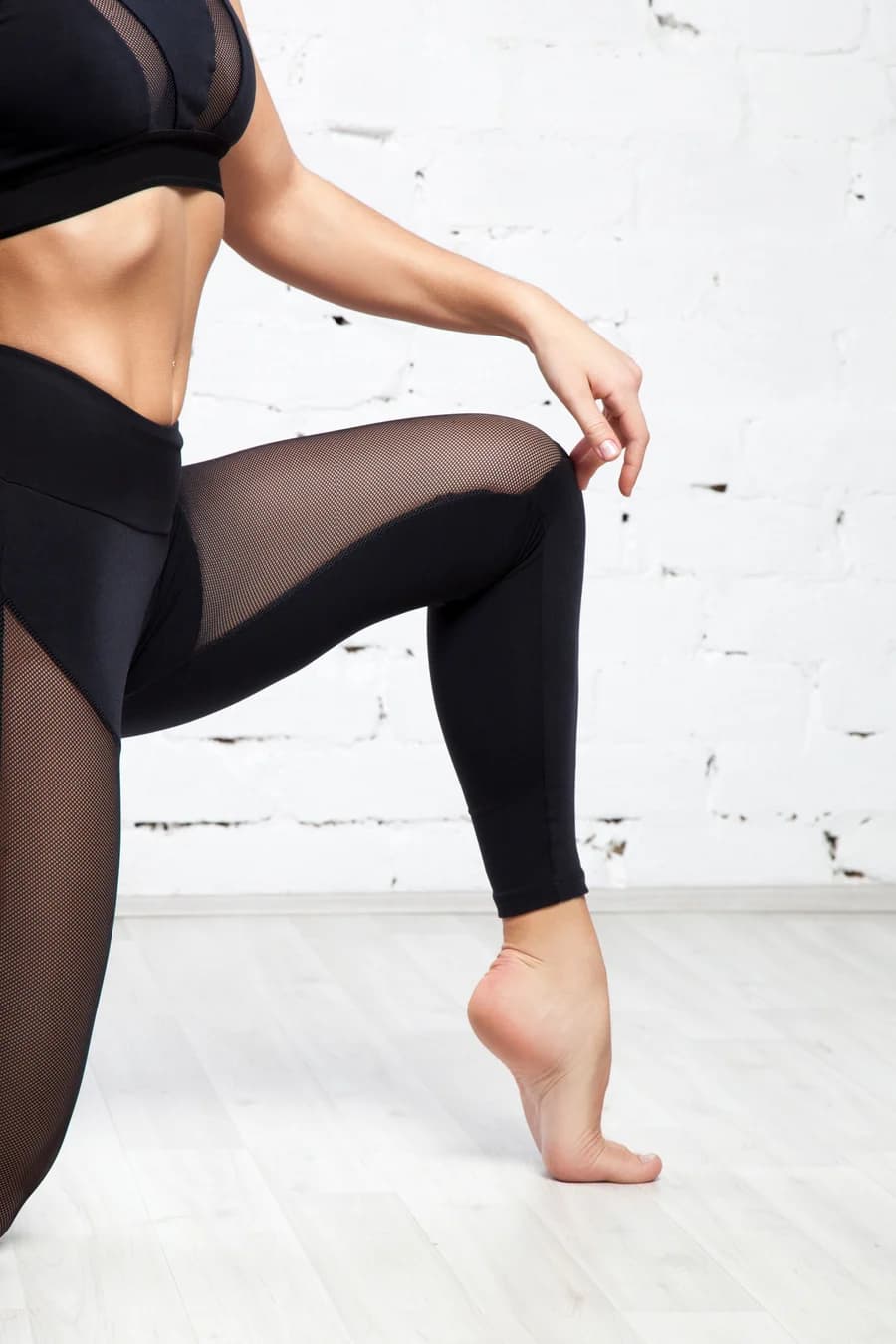
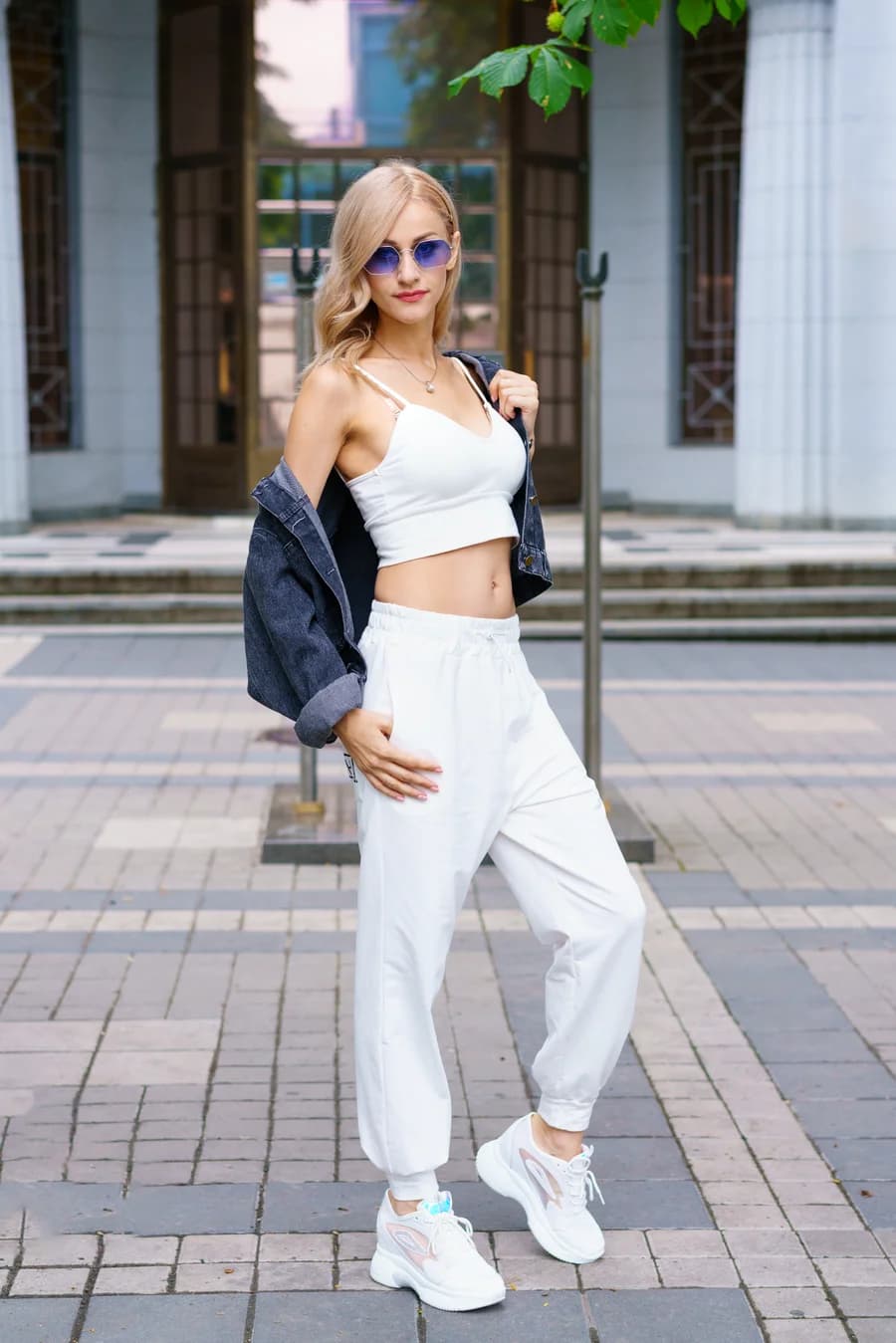
Yes. Jogger pants are one of the higher-volume categories in LA cut and sew production. The standard jogger construction uses a four-way stretch knit fabric (ponte, scuba, French terry, or technical stretch) cut with a tapered leg and assembled on a coverstitch machine for the internal seams, with a flatlock or coverstitch finish inside. The waistband is elasticated — either a fold-over elastic waistband (the elastic is folded over the top edge of the trouser and topstitched through all layers) or a separate knit waistband band sewn to the top of the trouser. Ankle ribbing (a separate knit ribband with more stretch recovery than the body fabric, set into the ankle opening to create the gathered pull-in at the cuff) completes the silhouette. Side pockets on joggers are typically a simple seam pocket (a pocket bag inserted in the side seam) or a welt or slash pocket. For athleisure-positioned joggers, we can add moisture-wicking fabric finishing, reflective tape, and performance labeling. Track pants and side-stripe athletic pants are also produced — side stripes are sewn as separate fabric strips or applied with heat transfer tape. Technical stretch tapered pants, jogger-trouser hybrids (ponte front, jersey back), and lounge pants in French terry are standard production items.
Pocket construction in pants is one of the highest-labor and highest-skill elements of pants production — a poorly constructed or misaligned pocket affects the entire front silhouette of the garment. Side-seam pocket (in-seam pocket): the pocket bag is inserted in the outseam (side seam) of the trouser during seam construction — the pocket opening is the gap in the side seam, finished with a stay-stitch to prevent the opening from stretching. This is common in women's trousers, casual pants, and some men's casual styles. Slanted or curved side pocket (quarter pocket): the pocket opening is cut as a curve or diagonal at the front of the trouser, faced with matching fabric or a contrast pocketing fabric, and the pocket bag is sewn to the facing — giving a clean, shaped pocket opening rather than an in-seam opening. This is the standard pocket in chinos, dress trousers, and work pants. Welt pocket: a pocket in which the opening is finished with a narrow strip of fabric (the welt) sewn over the pocket opening, creating a horizontal slot. Back welt pockets on trousers (single-welt or double-welt) are the standard for tailored dress pants. A double-welt pocket has two welt strips, one above and one below the opening — more complex to sew, with the welt widths and opening width confirmed in the tech pack. Patch pocket: a pocket bag (usually with a flap cover) sewn to the outside of the trouser — used in cargo pants, utilitarian work pants, and fashion pants. Cargo/bellows pocket: an oversized patch pocket with box pleats or bellows folds at the sides to allow the pocket to expand — the standard pocket on cargo pants, with a flap and button or snap closure. All pocket bag fabrics, facing fabrics, pocket opening dimensions, and reinforcement (bar tacks at the pocket mouth corners, rivets on cargo pockets) are specified in the tech pack.
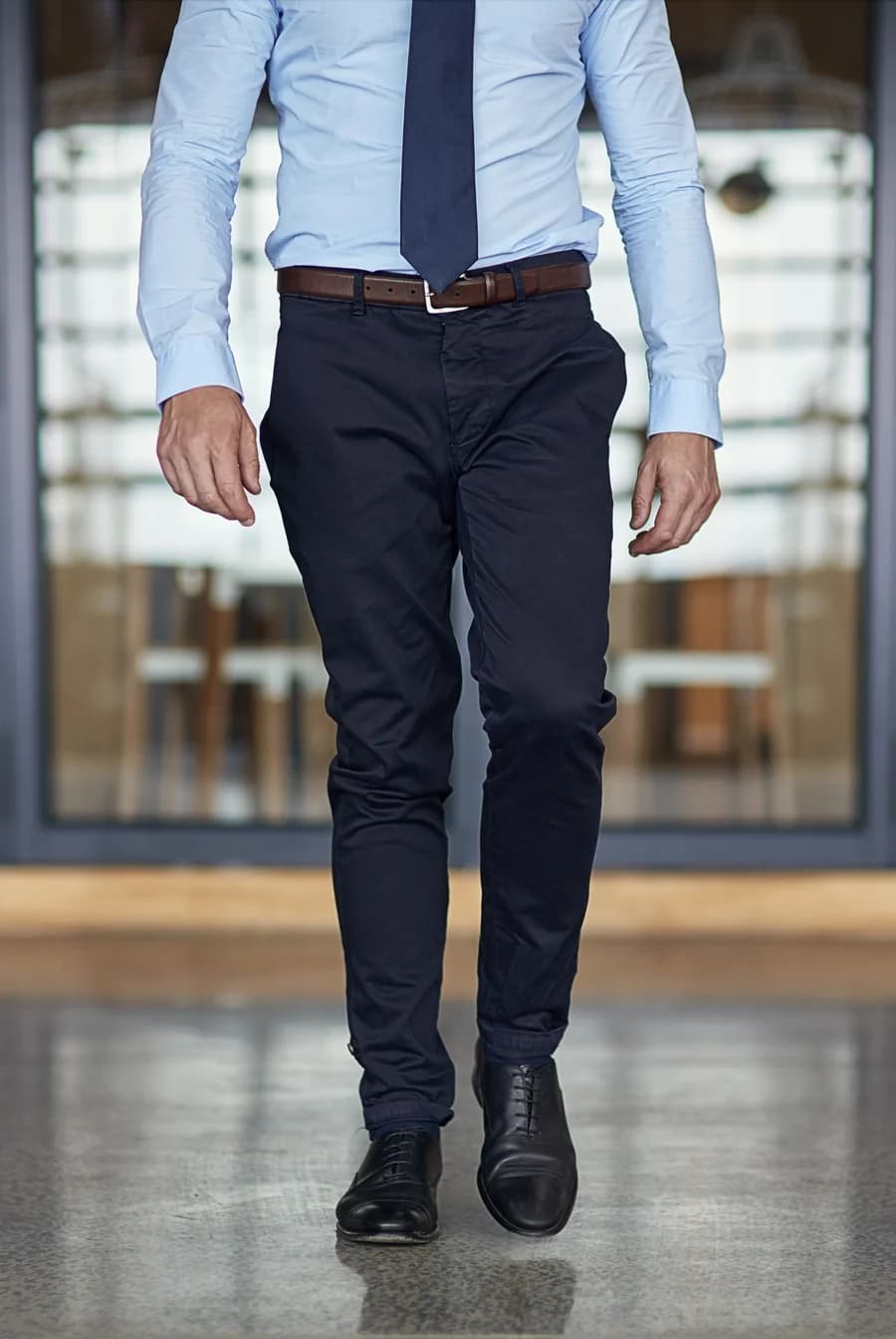
Tailored pants are constructed to a higher-precision standard using techniques that create a sharp, structured silhouette that holds its shape through wear. Fabric pressing at every stage is the most important differentiator — in tailored trouser production, each seam is pressed open as it is sewn (rather than pressed to one side), the crease is set in the legs before final hem, and the waistband is shaped over a ham. Flat-felled or clean-finished seams (rather than simple serged seams) are used on the inseam and outseam in premium tailored trousers. Inseam pressing (pressing the inseam and outseam open rather than to one side) produces a flatter, smoother profile through the leg. The center-front crease on dress trousers is set by pressing and, in premium production, maintained with a crease tape (a strip of fusible tape pressed into the crease from the inside of the leg). Trouser lining: full or partial lining in tailored trousers serves multiple functions — it prevents the outer fabric from wearing through at friction points (seat and inner thigh), reduces the drag of the fabric against hosiery or undergarments, and provides structure at the waistband. Partial lining is standard: the front of the trouser is flat and unlined (the pocket bags serve as the only internal layer), while the back seat section is lined with a lining fabric (polyester or silk lining, cut with ease to prevent pulling). Full lining encloses the entire interior of the trouser. Pleats: box pleat or knife pleat at the front of the trouser (sewn from the waistline downward, pressed into the fabric, and then released at the pocket level to fall as fold lines through the leg) are a tailoring detail that adds fabric volume at the seat and thigh for freedom of movement — common in formal and vintage-influenced trouser styles. All tailored construction methods are confirmed in the tech pack.
Yes. Private label pants manufacturing includes custom woven labels sewn at the center back waistband inside, printed care labels with fiber content (FTC compliant — cotton, linen, wool, polyester percentages confirmed from the fabric supplier), country of origin, and size. Belt loops, if present, carry no label — but waistband tack labels (a small secondary label sewn at the inside front of the waistband, sometimes carrying size, style code, or brand mark) are available. Button selection for waistband closure: we source and sample shell buttons, horn-look buttons, metal shank buttons, and branded logo-engraved buttons if the brand provides the mold or engraving file. Branded care labels with the brand's stylistic mark (custom icon, custom layout rather than the standard care label format) are produced and sewn in. Polybag packaging, folded presentation, and hanger-ready packaging with a hangtag at the waistband are all available. For premium trouser brands, a branded trouser hanger (clip hanger with brand label) is available. Private label from 50 pieces with full label and packaging setup.
Technical depth

Built for Performance, Not Just Looks

Every fabric choice, construction method, and quality standard explained so you can make decisions with confidence.

Pants Fabrics: Cotton Twill, Linen, Wool Suiting, Ponte, and Technical Stretch

Fabric selection determines the construction method, seam technique, waistband interlining, pressing protocol, and the final price per unit of a trouser. As a clothing manufacturer in Los Angeles, we source pants fabrics from LA fabric market suppliers and certified domestic and international mills. Fabric is confirmed and ordered before pattern work is finalized — fabric weight and stretch recovery directly affect pattern grading, seam allowance, and waistband interlining selection.

FabricWeight RangeStretchSeam MethodBest Pants StyleKey Consideration
Cotton Twill (light)6–7 oz/yd²NoneSerged or flat-felled inseamSummer chinos, casual trousers, work pantsBreathable; presses well; slightly wrinkle-prone in lighter weights
Cotton Twill (mid-weight)8–10 oz/yd²NoneSerged or flat-felledCargo pants, structured chinos, casual dress pantsMost versatile pants fabric; holds crease well; high durability
Stretch Cotton Twill7–9 oz/yd²2–5% (low stretch)SergedSlim and tapered casual trousersSpandex or lycra added to warp; improved comfort; no major drape change
Linen (pure)4–8 oz/yd²NoneSerged or Hong Kong finishWide-leg trousers, palazzo pants, summer trousersWrinkles intensely; pre-wash mandatory before cutting; breathable and cool
Linen-Cotton Blend5–7 oz/yd²NoneSergedRelaxed-fit summer trousersReduced wrinkling vs. pure linen; softer hand; slightly heavier drape
Wool Suiting (light, 150–200g)Light-weight0–5% (stretch suiting)Flat-felled or serged inseamSpring/summer tailored trousers, suiting separatesRequires lining; pressing cloth; dry clean care label
Wool Suiting (mid, 280–350g)Mid-weight0–5%Flat-felled or sergedFall/winter dress trousers, formal suitingBest crease retention; full lining standard; shrink-test before cutting
Ponte Knit250–320 g/m²Low (20–30%)Coverstitch or sergedWork trousers, knit trousers, casual wide-legNo fraying; stable for knit trouser; does not ravel at cuts
Technical Stretch (nylon/spandex)4–6 oz/yd²Four-way (40–60%)Coverstitch, flatlockJoggers, athletic pants, performance pantsHigh recovery; moisture-wicking finish available; seam must not restrict stretch
French Terry240–300 g/m²Two-way (20–35%)Coverstitch or sergedCasual joggers, lounge pantsLoop-back texture; soft hand; cotton-poly standard blend
Velvet / Velveteen8–12 oz/yd²NoneSergedEvening trousers, dress pants, fashion stylesNap direction must be consistent across all pattern pieces; pressing with needle board only

Ready to Produce Custom Pants?

Get a production quote for your pants and trouser line. Tailored dress pants, wide-leg trousers, joggers, and cargo styles in cotton, linen, wool, and ponte in LA.

50+ piece minimum
4-7 week turnaround
All waistband types