How to Choose a Fashion Startup Consultant (2026)

Key takeaways
- Choose a fashion consultant by what they have actually produced, not by how polished their pitch is. Real product history is the single best filter.
- Insist on named deliverables. You should know exactly what you get: a tech pack, a sourcing list, a cost sheet, a launch plan.
- The biggest green flag is factory access. A consultant who can open a real factory door is worth more than one who only advises.
- The biggest red flag is a general business coach dressed as a fashion expert.
To choose a fashion startup consultant, judge them on production track record, clear deliverables, real factory access, and whether they will tell you no. The consulting space is full of people who have read about the apparel industry but never shipped a garment, and telling them apart from the real ones is the whole game. This guide gives you the filters that matter, the exact questions to ask before you pay, the red flags that should end the conversation, and the deliverables a good engagement produces. If you would rather work with a team that both advises and manufactures, our fashion consulting service in Los Angeles is built to be judged on exactly these criteria.
How to choose a fashion consultant: the short version
Strip away the noise and a good fashion consultant clears four bars. They have made real products, not just advised on them. They can name exactly what you will walk away with. They have genuine relationships with factories they can actually get you into. And they will push back when your plan is wrong, because the right no protects your budget. Everything else, the website, the testimonials, the confident language, is secondary to those four. A founder who screens on track record, deliverables, access, and honesty rarely ends up with a talker.
What to look for in a fashion consultant
These are the signals that separate a builder from a marketer. Weight them heavily.
If a consultant scores well on these, the price almost takes care of itself, because you are buying outcomes rather than hours. If they score poorly, no rate is cheap enough.
Questions to ask before you hire a fashion consultant
Bring these to the first call and listen for specific, confident answers rather than smooth deflection:
- What products have you actually taken to production? You want brands and garments, not adjectives.
- Exactly what will I have when we finish? A real answer names documents and outcomes.
- Can you get me into a factory, and which ones? Vague answers here are the tell.
- How do you price, and for what scope? Clear scope means clear thinking.
- What would make you tell me not to do this? A consultant with no line they will hold is selling, not advising.
The quality of the answers matters more than the answers themselves. A real consultant gets more specific the harder you push. A talker gets vaguer.
Red flags to walk away from
Ready to make your line? Get a free production quote.
Drop your email and tell us what you are making. Our LA cut-and-sew team will follow up with real pricing and lead times, usually within 24 hours.
Some signals should end the conversation quickly:
- No production history. Someone who has never made a product is guessing alongside you, at your expense.
- All strategy, no specifics. If they never mention tech packs, MOQs, or cost sheets, they are a general coach in a fashion costume.
- Guaranteed success. With most clothing startups failing, anyone promising a sure thing is not being honest.
- Pressure to buy the biggest package. A good consultant sizes the work to your need, not their invoice.
- No factory access. If they cannot connect you to real production, a large part of the value is missing.
One red flag is a caution. Two or more is a reason to keep looking. The cost of the wrong consultant is not just their fee, it is the mistakes they fail to prevent.
Deliverables a good engagement produces
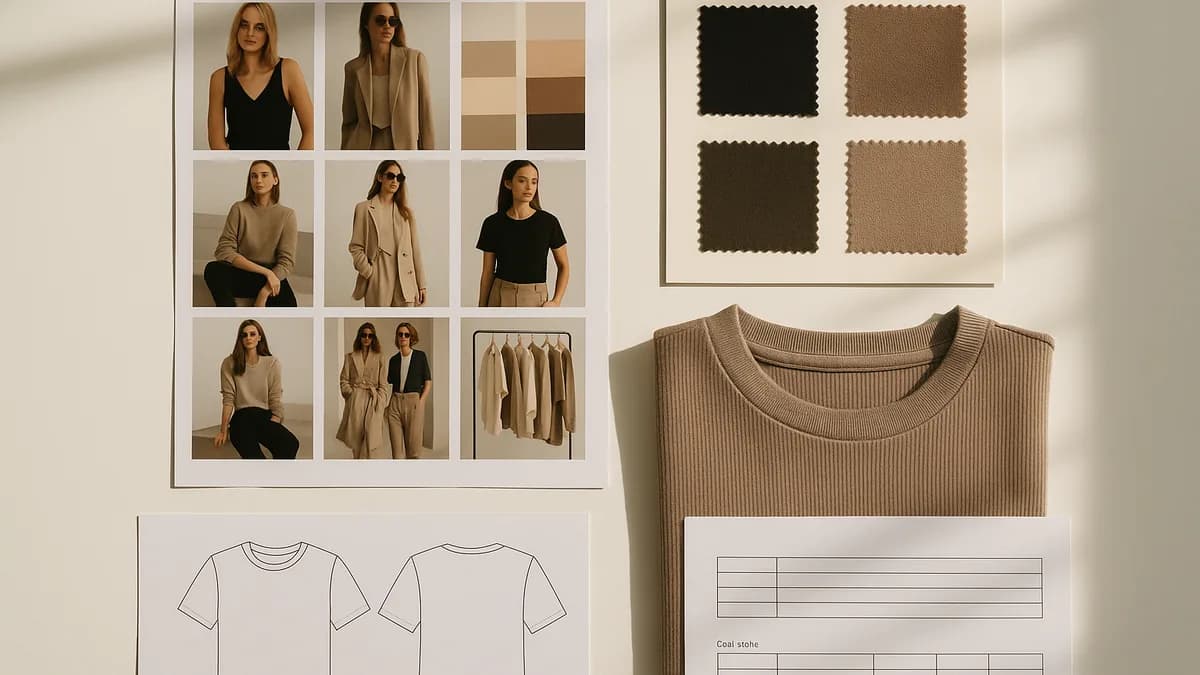
You should leave a real engagement holding tangible things, not just notes. Depending on scope, that usually includes a factory-ready tech pack, a sourcing list with real suppliers, a cost sheet that shows your true landed cost and margin, a production timeline, and a launch plan with channels and pricing. If a consultant cannot tell you which of these you will get, the engagement is undefined, and undefined engagements are where money disappears. Ask for the deliverables in writing before you start. A consultant confident in their value has no problem naming exactly what they will hand you. A useful test is to ask a fashion consultant for a sample artifact up front, a redacted tech pack or a blank cost sheet template, because someone who has produced real work can show you the documents, while a talker suddenly gets vague. The gap between naming a deliverable and actually producing one is the same gap between a real fashion consultant and a marketer with a nice website.
Match the consultant to your gap
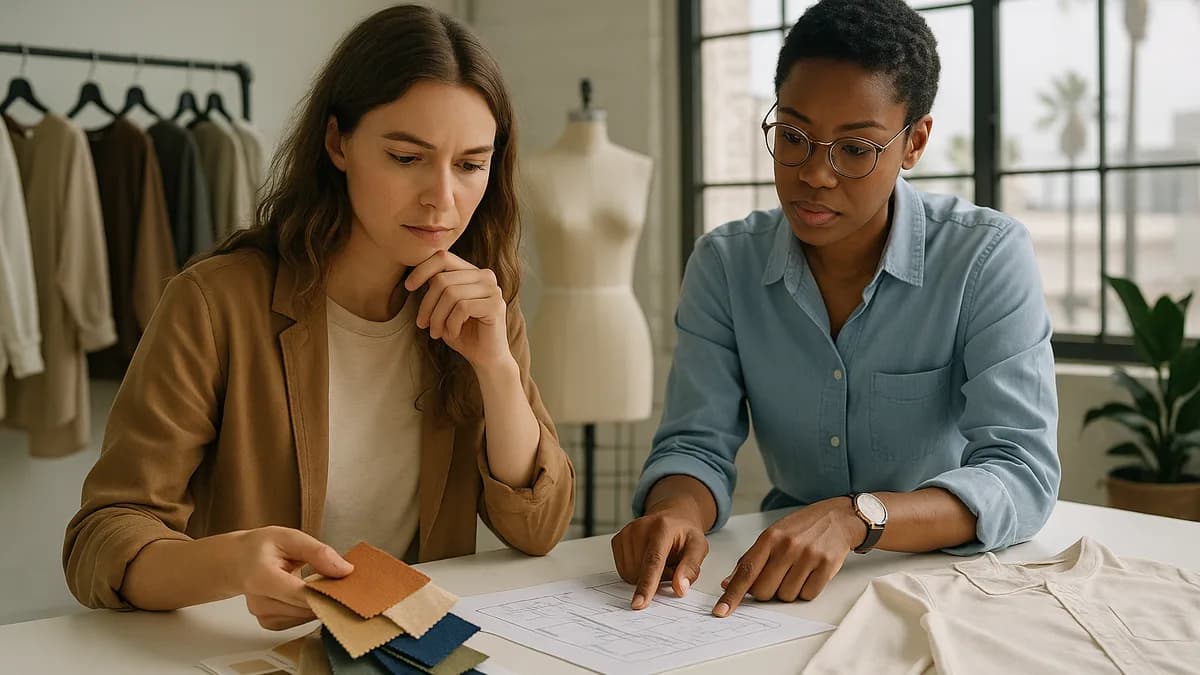
Consultants split into strategy-led and execution-led, and the right choice depends on where you are stuck. If you need direction on brand, positioning, and growth, a strategy-led consultant fits. If you need someone to actually build the product, source the fabric, and manage the factory, you need an execution-led partner. Most first-time founders need execution, because their problem is not the idea, it is turning it into a physical product. The cleanest option is a partner who covers both and manufactures too, so the advice and the making happen under one roof. That is how we work at Plucky Reach, a Los Angeles fashion consultancy and cut-and-sew maker, and it is why you can hold us to the deliverables and the factory access, not just the plan.
Vetting consultants right now? Put us through these questions or talk to our LA team and judge us on real products and real factories.
The local advantage
Where a consultant sits matters more than it sounds. One based in a production hub like the Los Angeles Fashion District can walk into the factories they recommend, inspect the work, and be accountable in person, which is a different level of trust than matching you with a vendor sight unseen. Proximity also means faster sampling, easier quality checks, and shorter feedback loops. If a consultant recommends a factory they have never physically visited, ask how they can stand behind the quality. Real access shows up in specifics: real names, real locations, and a genuine willingness to walk you onto the factory floor in person rather than over a screen.
Frequently asked questions
How do I choose a good fashion consultant?
Judge them on production track record, specific technical language, named deliverables, real factory access, and their willingness to tell you no. Those five signals separate builders who have shipped products from marketers who only advise.
What questions should I ask a fashion consultant before hiring?
Ask what products they have taken to production, exactly what you will have when you finish, whether and which factories they can get you into, how they price and for what scope, and what would make them advise against your plan.
What are the red flags with fashion consultants?
No production history, all strategy with no specifics, guaranteed success, pressure to buy the biggest package, and no real factory access. One is a caution; two or more is a reason to keep looking.
What should a fashion consultant deliver?
Depending on scope, a factory-ready tech pack, a sourcing list, a cost sheet showing true landed cost and margin, a production timeline, and a launch plan. Get the deliverables named in writing before you start.
Does it matter where a fashion consultant is located?
Yes. A consultant in a production hub can visit the factories they recommend, inspect quality, and be accountable in person, plus enable faster sampling and shorter feedback loops than a remote match.
Get Fashion Consulting Help | Use Our Cost Calculator | Contact Us
Related reading: What does a fashion consultant do? · Do you need a fashion consultant? · Fashion consultant vs designer vs coach
Ready to make your line? Get a free production quote.
Drop your email and tell us what you are making. Our LA cut-and-sew team will follow up with real pricing and lead times, usually within 24 hours.
Plucky Reach
Fashion Business Consulting • Los Angeles Fashion District
Plucky Reach is a fashion business consulting firm based in the Los Angeles Fashion District. We have helped 1,000+ clothing brand founders go from idea to production, from first sketch to retail shelf. Our team has 20+ years of direct relationships with LA garment manufacturers, and we specialize in connecting emerging brands with the right production partners.